
Optical transceiver & telescope
Transmit and collect the optical signal. Aperture, optical power and receiver design are selected through the link budget.
Satellite interlink terminal
A satellite interlink connects one spacecraft to another before traffic reaches a ground gateway. In the Star Jumper architecture, this is the orbital transport building block: mission requirements determine the paths, terminal configuration and handover strategy.
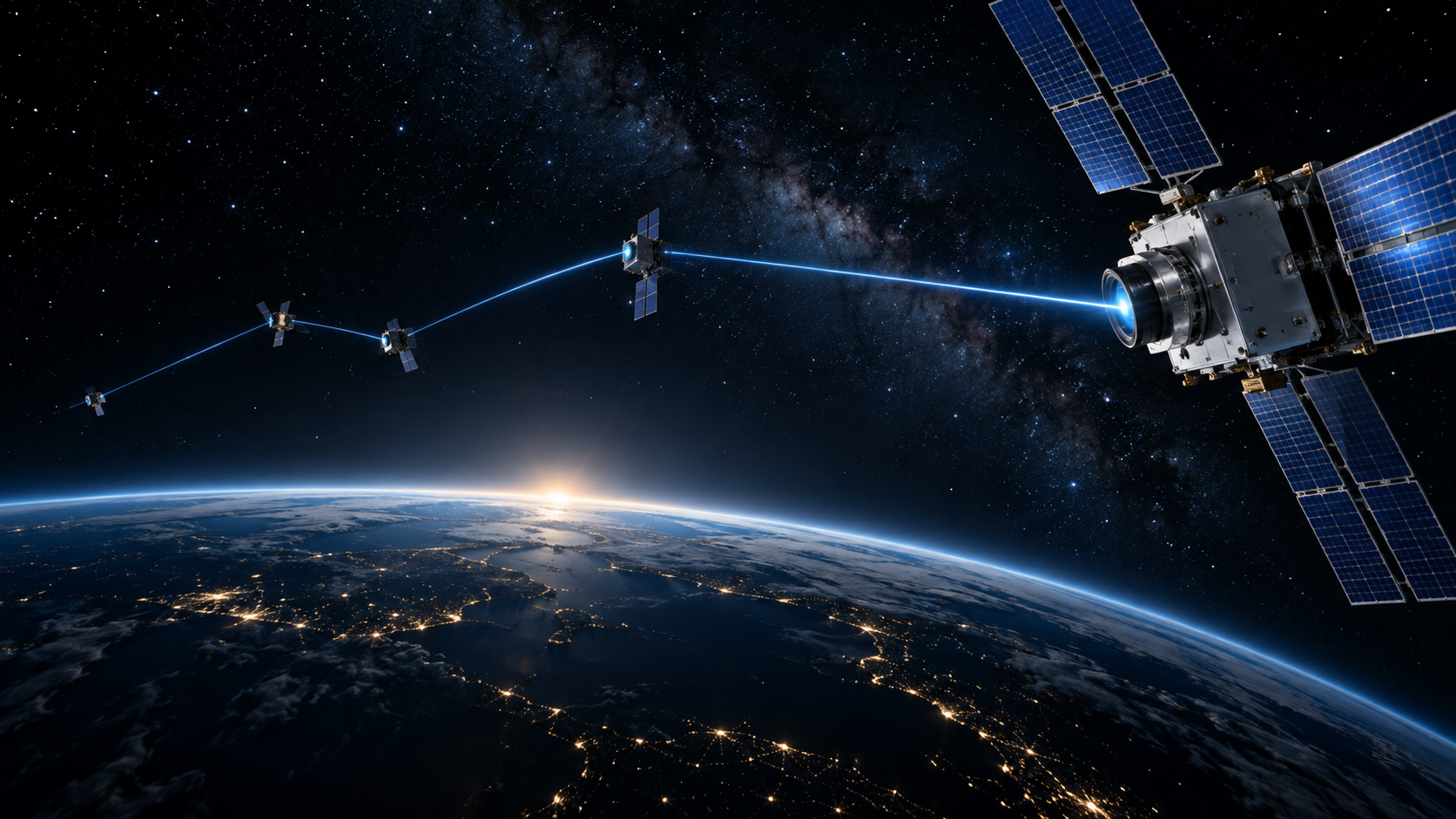
Celestial · Star Jumper
Connect spacecraft across a constellation.
Discuss this connection ↗Inside the device
The final configuration is selected around the customer requirement and engineering evidence.
Transmit and collect the optical signal. Aperture, optical power and receiver design are selected through the link budget.
Locate the counterpart terminal and maintain alignment as the spacecraft move.
Connect the optical channel to onboard data handling, coding and the spacecraft network.
Coordinate contact schedules, routing, terminal health and authorised operational changes.
Your requirements
Your existing architecture, operating conditions and growth priorities guide the solution.
Pilot & acceptance
Model the contact geometry and link budget, then test representative terminal and network interfaces in a controlled environment. Hardware and flight qualification require their own agreed programme.
Designed to scale
Evaluate how additional spacecraft change contact scheduling, route choice, gateway loading and operational oversight. Expansion is gated by traffic modelling, redundancy and evidence from the pilot.
Technical foundations: NASA optical communications · NIST post-quantum cryptography.