
Terrestrial networks
Evaluate campus, building, data-centre and remote-site connectivity using fiber, radio and free-space optical transport.
Network services
Design the communications around the information your organisation needs to move, the people it must reach and the continuity your operations require.
The connected architecture
A customer solution can combine existing terrestrial infrastructure with optical links and a separately scoped celestial segment.
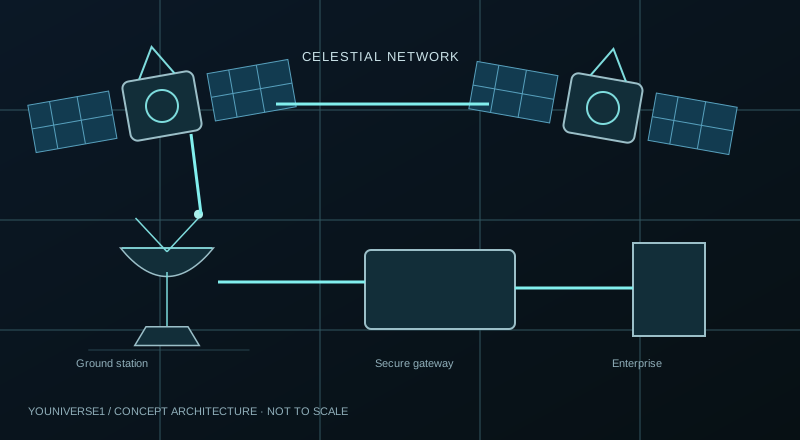
Evaluate campus, building, data-centre and remote-site connectivity using fiber, radio and free-space optical transport.
Define the orbital connections, space-to-ground handoffs and ground-segment dependencies for a satellite communications architecture.
Connect the transport to real workloads with routing, segmentation, security, monitoring and accountable operations.
Start with the value chain
The assessment turns your business priorities into engineering requirements.
Identify data sources, destinations, users and dependencies. Clarify the decisions or services each flow supports.
Establish capacity, latency, availability and operational baselines from the evidence available.
Compare paths and interfaces, identify constraints and create a staged plan with measurable acceptance.
Customer use cases
Examples are scoping starting points; the engagement is developed around your environment.
Plan interlinks, ground contacts, data delivery windows and enterprise integration.
Evaluate campus and site links, path diversity, secure gateways and traffic growth.
Define network handoffs, backhaul, support responsibilities and service continuity.
Assess temporary or permanent connections, field power, setup and alternate paths.
What you receive
The agreed deliverables may include a network baseline, options analysis, architecture, pilot plan, acceptance evidence and a staged scaling roadmap.
Technical foundations: NASA optical communications · NIST post-quantum cryptography.